Zeus by Geekvape: which model to start on
You go looking for an atomiser to learn building on, a shop assistant mentions Zeus, and you come home with a tank that has nothing to build in. The scene is common in Britain and it is not a swindle: Zeus by Geekvape covers devices that strip down completely and devices that only take a sealed coil. Learning to read the reference is what prevents the wasted purchase.
What Zeus by Geekvape actually refers to
Zeus by Geekvape is not a product but a family of atomisers from the manufacturer Geekvape, running across several generations and now often shortened to the letter Z on packaging and on retailer listings.
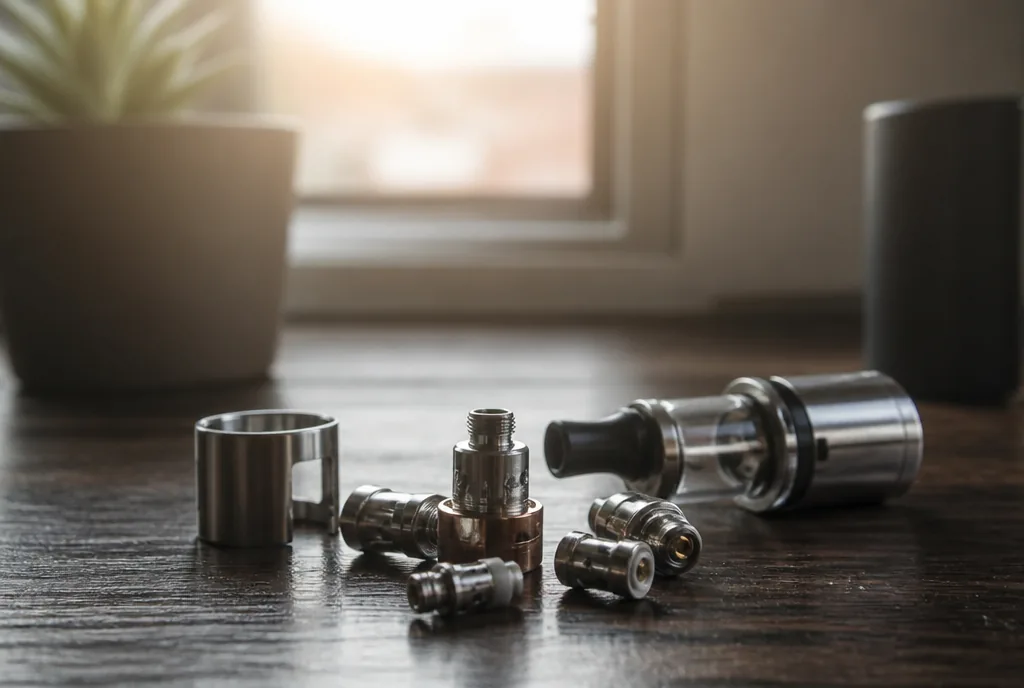
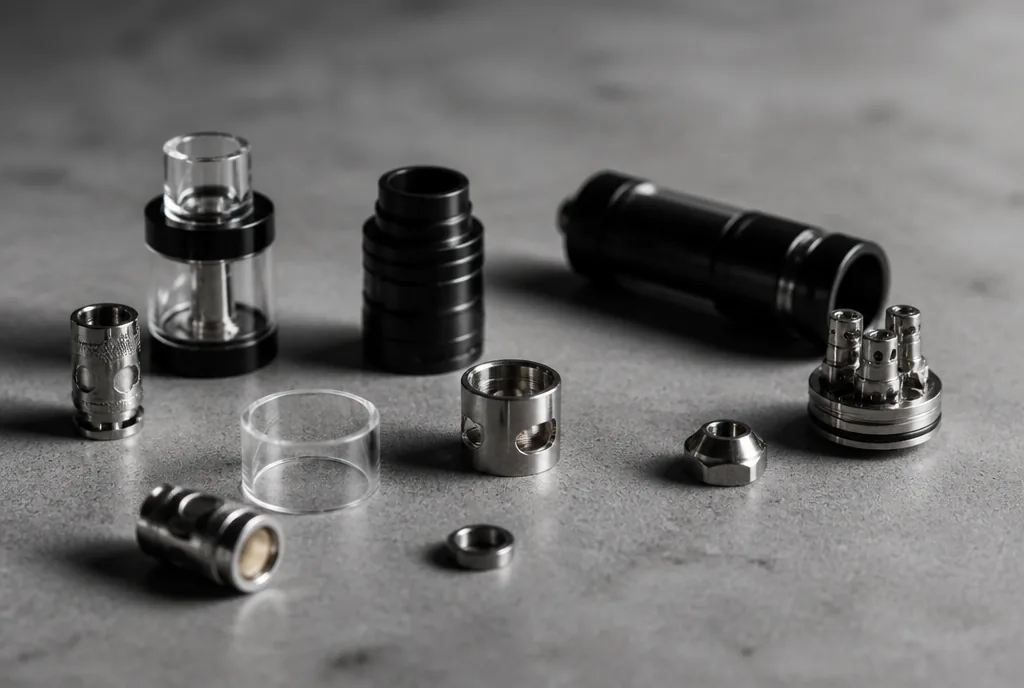
That family splits into two distinct worlds. On one side, tanks taking a sealed factory coil, where nothing is built. On the other, rebuildable atomisers with a bare deck you equip yourself. Same commercial name, opposite use, and the price similarity between them does nothing to help.
Reading a Zeus by Geekvape reference before paying
The suffixes are not decoration, they are the category marker. A tank badged Z Sub Ohm, Z Nano or Z Fli takes Z series coils, sold in packs and fitted in seconds with no tools.
References carrying the letters RTA, the ZX RTA being the obvious one, mean rebuildable tank atomiser: a tank whose base is a bare deck, on which you fit your own coil and your own cotton.
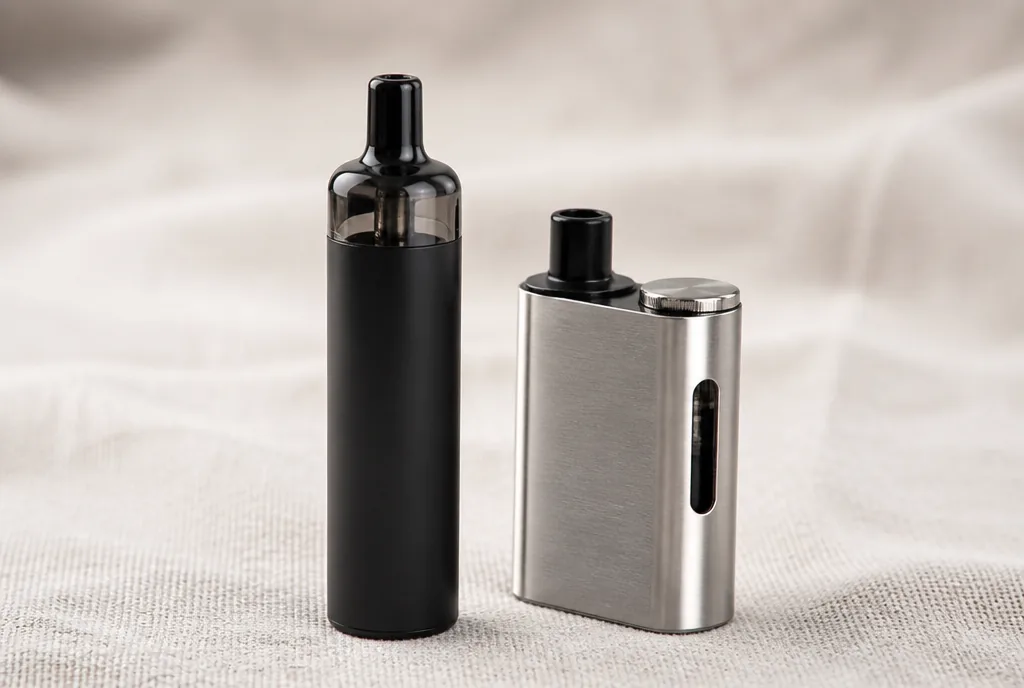
A third case causes genuine confusion. Zeus also appears in the names of complete kits pairing a mod with a tank from the range. There, the word describes the tank supplied in the box, not a deck to build on, and the listing photograph rarely makes that clear.
The Z tanks, the version with no building
This is the best selling branch of the family and usually the first one a British buyer meets. It deserves understanding even if rebuildables are your goal, because it is the point of comparison for everything else.
A Z series coil is a small metal cartridge that already contains the heating element and the cotton. It pushes or screws into the base of the tank, soaks for a few minutes, and is vaped until it is spent and then replaced. No fine handling is required.
What you gain is time and consistency of result. What you lose is any control over the outcome, since the wire type, the cotton quantity and the resistance are all fixed by the manufacturer, and any understanding of what is happening inside. Manufacturers quote a coil life expressed in millilitres of liquid, and British retailers routinely note that running hot shortens it, and that letting the tank run low produces a burnt taste. Those two observations, one economic and one practical, are what push a lot of people towards building.
The ZX RTA, the rebuildable door into the range
This is the model to look at if your objective is to learn to build. The manufacturer presents it explicitly as designed for RTA users, with a deck laid out to make building easier rather than merely possible.
Two things about it speak directly to a beginner. The deck gives clear access for trimming the protruding wire legs, which avoids the acrobatics typical of enclosed decks and, more importantly, makes it realistic to cut flush. And the inner chamber comes apart, so it can be cleaned without an exotic tool. Spare cotton and the assembly tools come in the box, which is a quiet acknowledgement that wicking is part of owning the thing.
One detail that passes unnoticed matters for a British buyer. Refillable tanks sold here are capped at 2 ml, so the edition on UK shelves holds less than the standard edition sold elsewhere. That is regulation rather than a commercial variant, and it means overseas reviews describe an object you will not buy in quite that configuration. The same framework caps nicotine containing e-liquid at 20 mg/ml in bottles of 10 ml, and vaping products are not for sale to under-18s.
Moving from a Z tank to a deck you build on
The transition is not abrupt, because the base stays the same: same 510 connection, same mod, same top filling habits. The device in your hand does not change; the thing you do to it does.
Three new gestures appear. Winding a coil, clamping it and verifying its reading, then placing cotton in the wick ports of the deck. The first is set out in our vape coil build guide, and the last needs particular care on a tank, where the ports have to be filled without packing, a point covered in our guide to wicking a coil.
Wire is a separate decision, and kanthal remains the most forgiving material to learn the gesture on, precisely because it can be rewound after a failed attempt.
The precautions specific to an enclosed rebuildable
An RTA is not a dripper: once reassembled, the deck sits enclosed in a metal chamber. That constraint changes the nature of the check you have to make, and it is the single most common source of trouble for people arriving from open decks.
The building space is more limited than it looks. A coil that sits comfortably on the deck can still touch the chamber once everything is screwed back together, which means the size of the coil has to be chosen with the closed chamber in mind, not the open deck. Always test for a short circuit on a regulated mod before wicking, since cotton makes disassembly messier and hides the coil from view.
A coil must touch neither the cap nor the deck. Contact of that kind creates a short, and the mod will usually refuse to fire, which is the protection doing its job. If your mod displays an error or an incoherent value, take it apart rather than pressing again, and never disable a protection to get past the message. A verified build reduces the risk without removing it, and the device manual takes precedence over any general rule.
The battery side is not negotiable either. Cells with intact wraps, married as a pair in a twin battery mod, carried in a rigid case, charged on a suitable charger on a non flammable surface. The discharge limit to work from is the continuous discharge rating on the cell manufacturer datasheet for the exact cell you own, never the figure printed on the wrap.
Frequently asked questions
Do Zeus and Z mean the same range?
Yes. Geekvape progressively shortened the commercial name Zeus to Z on recent packaging without changing the lineage of the products. Both names coexist on British retailer listings.
Are Z coils interchangeable across the whole family?
Not systematically. Coil series evolve from one generation to the next and some references are specific to a single model. Check the exact reference printed on the box before ordering.
Can a ZX RTA be vaped with the coils supplied?
The manufacturer includes coils in the box, so the tank can be used straight away. That is a sensible way to get to know the device before attempting a first build on it.
Which drip tip fits these atomisers?
The ZX RTA accepts the two most common formats, the narrow 510 and the wide 810. The first tightens the draw, the second opens it, which is a matter of preference rather than performance.
Is a special tool needed to open this type of atomiser?
What you need is generally supplied. The ZX RTA ships with an allen key and a proprietary triangular tool, which saves improvising with an unsuitable screwdriver and rounding off a screw.
Choosing your Zeus by what you want to learn
The name Zeus by Geekvape tells you nothing about the level required: the suffix does. A Z tank will let you vape without ever building anything, a ZX RTA will oblige you to learn, and that obligation is exactly what you are after if rebuildables interest you.
Taking the time to read a full reference before buying avoids the disappointment, and the habit carries well beyond one brand. Whatever else changes in the range, the split running through Zeus by Geekvape between sealed coils and bare decks is the one thing worth checking on every listing you open.
Editorial content for adult readers only. Vaping products contain nicotine, a substance that causes addiction. Not for sale to under-18s in the United Kingdom. This article is not a buying recommendation.